
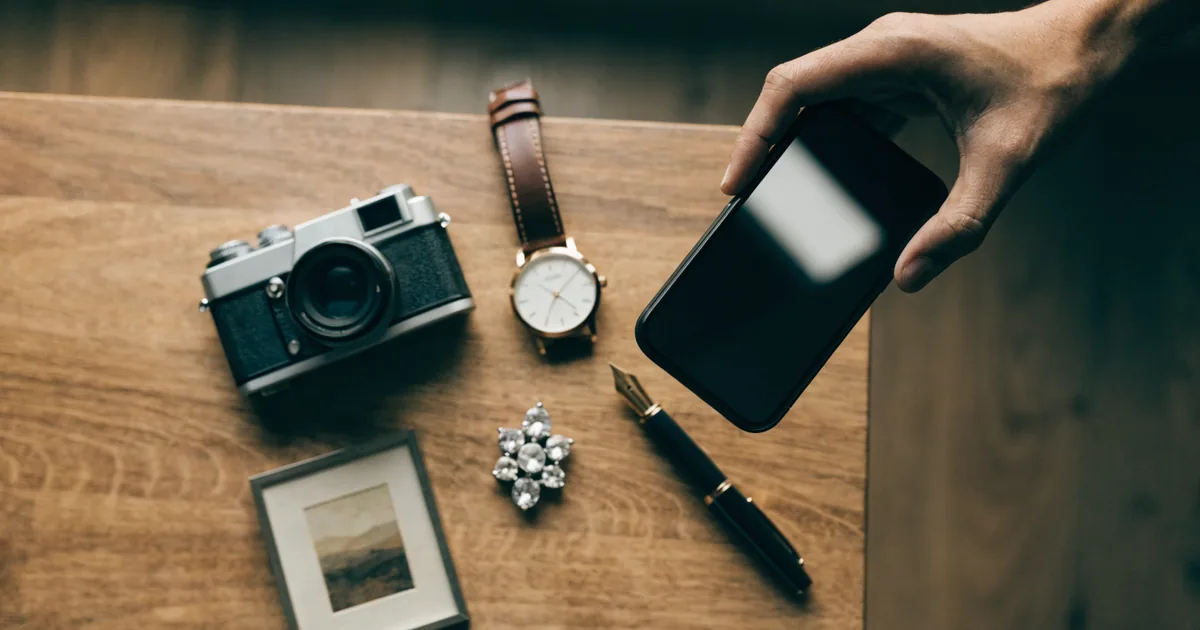
Imagine you suffer a burglary or a fire at home tomorrow. Your insurer will ask for something very specific: to prove what you had and what it was worth. Most people can't, and that's the leading cause of reduced payouts in home losses.
The good news: documenting your valuables properly takes an afternoon, not weeks. This guide explains how to do it so your record has real value with the company.
Why your word isn't enough for the insurer
When you report a loss, the company's adjuster assesses two things: that the item existed and was in your home before the loss (so-called pre-existence) and its approximate value. Without proof, both are left to the adjuster's discretion, and the negotiation starts against you. We go deeper here: what proof of pre-existence is and how to prove it.
Purchase receipts help, but few people keep them for years. Dated photographs with context, on the other hand, are the most accessible and widely accepted proof of pre-existence.
Which objects to document first
You don't need to photograph every teaspoon. Prioritise by value and by how hard they'd be to replace:
- Jewellery and watches: per-item limits on standard policies tend to be low; documenting them is essential.
- Electronics: TVs, computers, cameras, consoles. Note the serial number whenever you can.
- Art, antiques and collections: coins, stamps, vinyl, comics, wine. Their value is hard to prove without a prior record.
- High-end musical instruments and sports gear.
- Valuable furniture: design or inherited pieces.
How to photograph each object properly
Good photographic documentation follows three rules:
- A wide shot with context: the object within the room. Place the piece in your home, which is exactly what the adjuster needs to see.
- A close-up: brand, model, serial number, maker's signature, hallmarks on jewellery or any identifying feature.
- Condition: photograph the flaws too. An honest record gains credibility.
Do it in natural light and without rushing. The digital file's date acts as a time reference, and timestamped inventory services reinforce that proof.
From a camera roll to a useful inventory
A thousand loose photos on your phone are not an inventory. For the record to work in a loss you need, for each object: description, category, location in the home, approximate acquisition date, estimated value and the associated photographs.
Keeping this in a spreadsheet is possible, but tedious, and usually abandoned by the third row. This is where artificial intelligence changes the rules: tools like SmartInventory AI identify the object from the photograph, describe it, classify it and assign an indicative valuation automatically. Your afternoon of work comes down to taking photos. If you're after the full method, see how to make a home inventory for insurance.
Purchase value, replacement value and indicative value
Three different figures it's worth not confusing:
- Purchase value: what you paid at the time. Useful as a reference, but not very representative for electronics (depreciates) or collectibles (may appreciate).
- Replacement value: what it would cost to buy an equivalent object today. It's the usual basis for payouts on home policies.
- Indicative value: an informed estimate of the current market value. The indicative value you declare belongs to this category: an excellent reference to size your policy and declare sums, though it never replaces an official appraisal when the company requires one (for example, on high-value jewellery). We cover it in indicative value vs official appraisal.
Review your policy's insured sums with your inventory in front of you: most homes are underinsured on contents without realising it.
Where to keep the documentation
The rule is simple: never only at home. If the loss destroys the property and the inventory was in a drawer or a local hard drive, you've lost both. Use cloud storage with protected access, and share access or a copy with someone you trust.
Keep it alive
An out-of-date inventory loses evidential value. Two habits are enough: add each significant purchase as it happens (two minutes with your phone) and do a quick review once a year, for example when renewing the policy.
Start today: your first documentation session
Pick the room with the most concentrated value —usually the living room or the main bedroom—, spend 30 minutes photographing following the three rules and let the AI fill in the card for each object for you (you add the value). With the free plan of SmartInventory AI you can digitise your first objects at no cost and see how your documented inventory looks.
The best time to document your belongings was when you bought them. The second best is today.